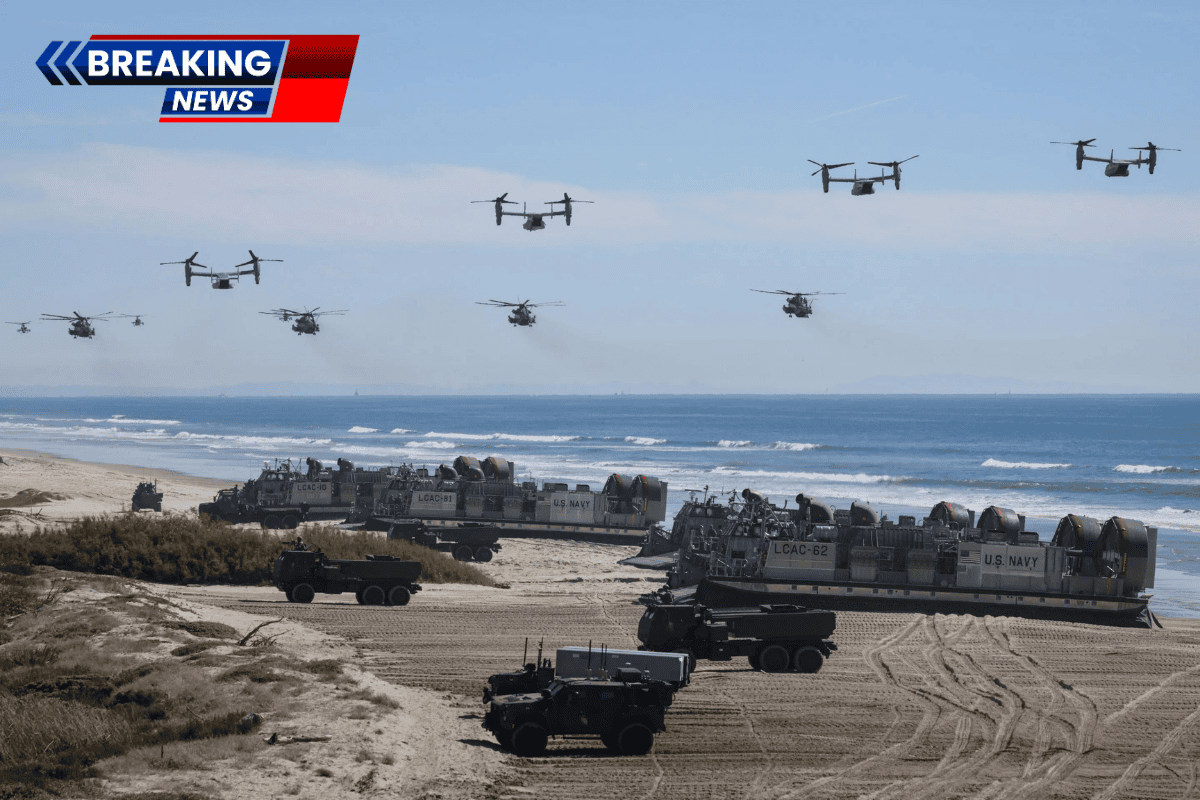
A potentially decisive confrontation is brewing as U.S. Marines are being deployed to the Middle East in response to Iran’s control over the Strait of Hormuz, a critical waterway for global oil shipments.
President Donald Trump has raised the stakes, threatening to destroy Iranian power plants unless the strait is reopened by Monday.
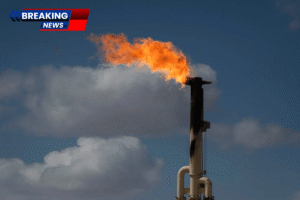
In response, Iran has threatened to target key infrastructure across the Gulf, including critical desalination plants that provide fresh water to much of the region.
As both sides show no sign of backing down, military analysts predict that the U.S. may expand its efforts from aerial operations to a ground offensive.
Ground Offensive or Naval Blockade?
While U.S. warships were previously suggested to escort oil tankers through the Strait of Hormuz, they would still be entering Iran’s “kill box”—a dangerous zone of control.

To address this threat, U.S. ground troops could be deployed along the strait to clear out obstacles to shipping and protect vulnerable vessels. A strategic point for U.S. forces could be Kharg Island, a key hub for Iran’s oil exports, where controlling it could pressure Iran to reopen the strait.
However, experts have pointed out the challenges of holding ground in this area, as Iran has attacked U.S. military bases and embassies in the region before. This highlights the risks of a ground offensive.
U.S. Military’s Aerial Strategy
For now, the U.S. military is intensifying its airstrikes on the Hormuz area, targeting Iran’s naval capabilities. Apache helicopters and A-10 Thunderbolt aircraft have been used to take out fast attack boats, while bombers have destroyed Iran’s stockpiles of anti-ship missiles.
Possibility of a Naval Blockade
Another approach being considered is a naval blockade to prevent Iranian oil from reaching international markets. This strategy could have a significant economic impact on Iran, potentially causing the collapse of its economy by cutting off its key source of revenue.
Robin Brooks, a senior fellow at the Brookings Institution, suggested that a blockade could force Iran to reopen the strait quicker than any direct military confrontation.
China, a major buyer of Iranian oil, would likely press Tehran to reopen the strait to prevent further disruption. A blockade could deprive Iran of the hard currency it needs to fund its military efforts.
Richard Haass Proposes “Open for All or Closed to All” Policy
Richard Haass, former president of the Council on Foreign Relations, has suggested an “Open for All or Closed to All” policy. This would involve a 200-mile defensive line across the Gulf of Oman, using ships, aircraft, and drones to enforce a total blockade on Iranian oil exports.
Haass believes that denying Iran its main source of income would put domestic pressure on the Iranian regime, forcing it to accept a ceasefire or face challenges to its authority.
Under this policy, no tankers from Iran would be allowed to reach their destination in another country until Iran ends its attacks on commercial vessels in the Strait of Hormuz.
Implications for Global Oil Markets
A blockade would remove a small percentage of Iranian oil from the global market, which could increase oil prices. However, as Haass notes, if the blockade leads to a swift resolution of the conflict, the price surge might be short-lived.