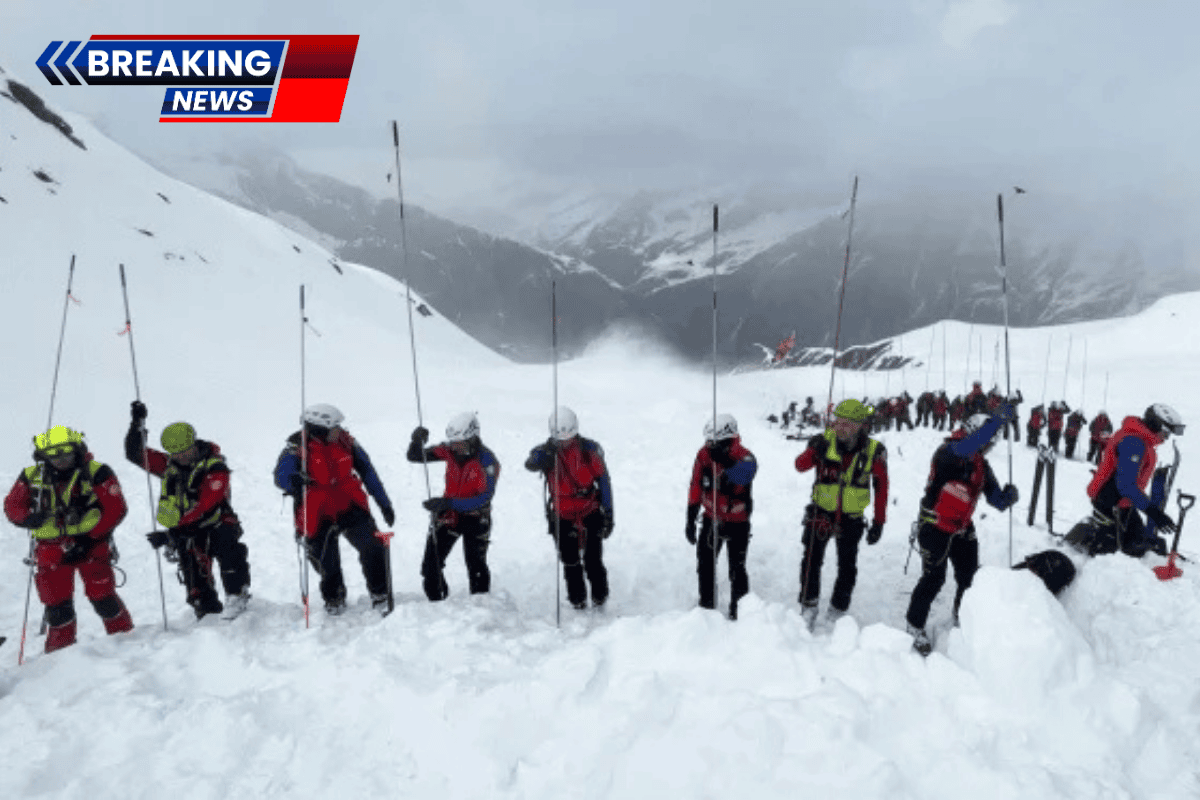
An avalanche in the South Tyrol region of Italy on Saturday tragically killed two skiers and injured several others, according to the country’s mountain rescue service.
The avalanche occurred in high alpine terrain at an altitude of around 7,874 feet on the slopes of Hohe Ferse (also known as Monte Tallone Grande), near the town of Ratschings, close to the border with Austria.
Details of the Incident
The avalanche struck at approximately 11:40 a.m. local time (1040 GMT). According to the CNSAS rescue service’s Bolzano emergency center, 25 skiers were caught in the avalanche. In addition to the two fatalities, three skiers were seriously injured and two sustained minor injuries.
A large-scale rescue operation was launched immediately after the avalanche. Six helicopters and approximately 80 rescuers from CNSAS, the Alpine Association, police, and firefighters were involved in the search and rescue efforts. The operation was critical in recovering the victims and assisting those injured.
High Number of Avalanche Fatalities This Season
This tragic event contributes to an unusually high number of avalanche-related deaths this season. The European Avalanche Warning Services (EWS), which tracks avalanche-related fatalities, reports that fatalities typically average 100 per season.

However, by March 16, 2026, the number of reported deaths had already reached 127, with 33 fatalities in Italy, 31 in France, and 29 in Austria.
Experts have pointed to an exceptionally unstable snowpack as a primary cause of the high number of fatalities. Many skiers have been drawn to off-piste slopes following recent heavy snowstorms, which have created dangerous conditions.
Impact of Climate Change on Snow Instability
Climate experts have raised concerns that rising temperatures and stronger winds could be exacerbating the instability of snowpacks in alpine regions. These changing weather patterns contribute to more unpredictable avalanche conditions, putting skiers and mountaineers at greater risk.