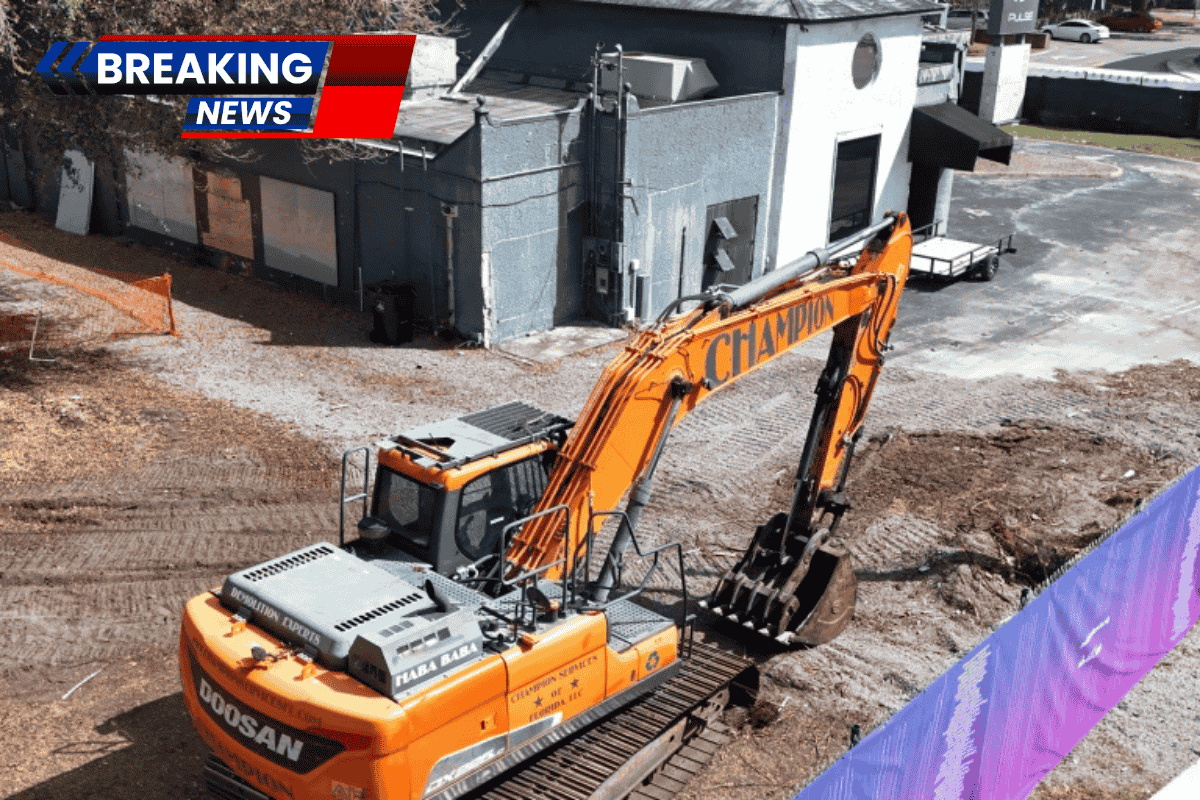
Crews began tearing down the Pulse nightclub building on Wednesday, nearly a decade after the tragic mass shooting that took the lives of 49 people at the LGBTQ‑friendly club.
The demolition marks the end of the structure that stood as both a crime scene and a makeshift memorial, as the city prepares to build a permanent tribute to the victims.

The city of Orlando purchased the property in 2023 and has long sought a path forward to honor those killed on June 12, 2016 — one of the deadliest mass shootings in U.S. history.
Construction crews began removing walls and debris this week, clearing the site for a future memorial that is expected to open in 2027.
Fatal 2016 Mass Shooting and Aftermath
The Pulse attack occurred during a Latin night event, when gunman Omar Mateen opened fire on patrons inside the club, killing 49 and injuring 53 others before being killed in a standoff with police.

Mateen had pledged allegiance to the militant group ISIS, and the incident was widely treated as a terrorist attack hate crime against the LGBTQ community.
Over the years since the massacre, survivors and families of those killed have sought closure and remembrance, with temporary memorials set up at the site. Survivors were even invited to walk through the building and honor their loved ones as the transition toward demolition took shape.
Plans for a Permanent Memorial
Orlando plans to replace the nightclub with a $12 million permanent memorial, which will serve as a place of reflection, remembrance, and healing for families, survivors, and visitors. The memorial is expected to be completed and open to the public by fall 2027.

The long delay between the attack and the demolition reflects years of debate and planning around how best to honor the victims and preserve the site’s significance.
Orlando’s efforts come after earlier attempts by a private foundation to buy the property stalled, leaving the future of the site uncertain until the city’s purchase.
Broader Context and Related Controversies
The demolition comes amid ongoing debates in the U.S. over LGBTQ+ representation in public spaces. In recent years, a Pride flag at the Stonewall National Monument was removed by federal authorities, and a rainbow‑colored crosswalk near the Pulse site was painted over during disputes about public artwork and political expression.
For the LGBTQ community and those affected by the Pulse shooting, the demolition is both a symbolic end and a new beginning — as focus shifts from the physical building to creating a lasting memorial that honors the memory of those lost.